Agricultural commodity markets were shaped this week by rapid harvest acceleration across the Corn Belt, ongoing digestion of the October WASDE, and a bullish monthly Cattle on Feed report. Open harvest windows enabled producers to push combine progress rapidly past the halfway mark, resulting in heavy localized grain movement and seasonal basis pressure. Meanwhile, cattle futures faced heavy late-week selling pressure despite a fundamentally supportive monthly Cattle on Feed report; softening wholesale beef cutouts, packer margin compression, and month-end fund liquidation triggered declines across both live and feeder pits.
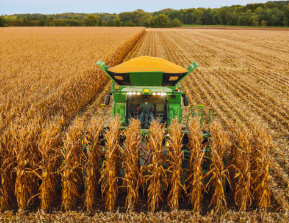
Corn: Corn spent the week consolidating in a narrow range above its recent lows, battling heavy commercial flow. USDA reported national corn harvest surging to 60% complete (up 16 percentage points in a single week), rapidly narrowing the deficit to the 66% five-year average. December corn closed the week at $4.47 ½ .
Soybeans: Soybean futures traded with a soft undertone as the U.S. harvest neared the homestretch. USDA pegged the national soybean harvest at 79% complete (close to the 81% five-year average), with northern growing states reporting upwards of 90% cleared. While domestic crush rates remain active, the seasonal influx of physical supply and sluggish export demand kept beans on a lower range. January soybeans closed at $12.34 ¼ .
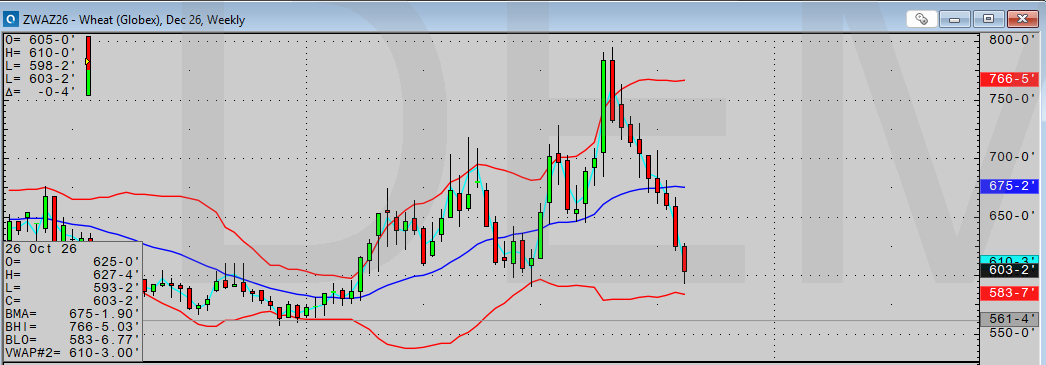
Wheat: Chicago wheat futures extended their historic downturn this week, logging a ninth consecutive weekly decline, marking the longest continuous losing streak for the wheat complex in 29 years, dating back to 1997. The prolonged slump has been driven largely by the steady erosion of the war-risk premium, as headlines of diplomatic peace talks between Russia and Ukraine and proposals to safeguard Black Sea commercial shipping prompted speculative funds to aggressively expand net-short positions. Even with localized corridor disruptions, cheap Russian exports rerouted via Baltic ports continue to undercut U.S. offers abroad, completely overshadowing structurally tight domestic supply where the 2026 U.S. winter wheat crop sits near a 50-year low. Meanwhile, USDA reported national winter wheat planting advanced to 73% complete, with 46% emerged following beneficial mid-October rains. Chicago December Wheat closed at $6.03 ½ and KC Wheat closed at $6.44 ¼ .
Cotton: ICE cotton futures faced technical selling late in the week, with December cotton slipping to 77.96 cents/lb. The market continues to absorb harvest activity across the Mid-South and Texas (surpassing 45% complete nationally).
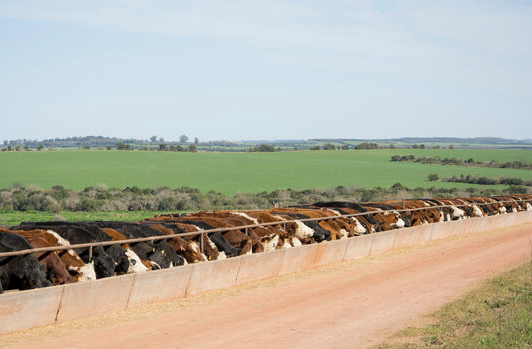
Live Cattle: December live cattle fell lower through profit taking late in the week. Physical cash fed cattle held steady, with packers forced to maintain bids despite tight processing margins. Live cattle closed red at $220.95. October live cattle went off the board today at $224.00.
Feeder Cattle: Feeder cattle tracked the live complex lower as end of the month profit taking occurred, despite the bullish Cattle on Feed report. January feeders closed in the red also at $331.775.
Macro markets were dominated by elevated energy prices and volatility across major equity benchmarks.
Crude Oil: WTI crude futures remained near multi-month highs around $102 per barrel. Energy markets continued to price in elevated supply premiums stemming from Gulf maritime tensions, infrastructure strikes in the Middle East, and tight global product inventories.
S&P 500 & Equities: Equities endured heavy volatility as Wall Street navigated both the busiest stretch of Q3 corporate earnings season and the Federal Reserve’s October policy decision. On Wednesday, the FOMC voted 10–2 to pause and hold the benchmark federal funds rate steady at 3.75%–4.00%. Meanwhile, corporate earnings delivered a mixed backdrop: while aggregate S&P 500 profit growth remained resilient across financials and industrials, mega-cap tech and semiconductor shares slumped late in the week as investors scrutinized surging AI capital expenditure budgets and rising depreciation costs against monetization timelines. Caught between the Fed's higher-for-longer rate posture, the 10-year Treasury yield pinned near 5.00%, and crude oil hovering near $100 per barrel left the S&P 500 consolidating near 7560 into the weekend.
Trading futures and options involves the risk of loss. You should consider carefully whether futures or options are appropriate to your financial situation. Only risk capital should be used when trading futures or options. Investors could lose more than their initial investment. Past results are not necessarily indicative of future results. The risk of loss in trading futures or options can be substantial, carefully consider the inherent risks of such an investment in light of your financial condition.