Agricultural commodity markets were driven this week by the ongoing fallout from the September WASDE report, shifting packer margins, and position-building ahead of USDA’s monthly Cattle on Feed report. Grain futures saw choppy two-sided trade as harvest activity accelerated across the Midwest, testing local basis and farm storage capacity. Meanwhile, the livestock complex came under technical pressure late in the week as deteriorating packer margins and news of more border reopenings prompted fund selling despite solid physical cash trade.
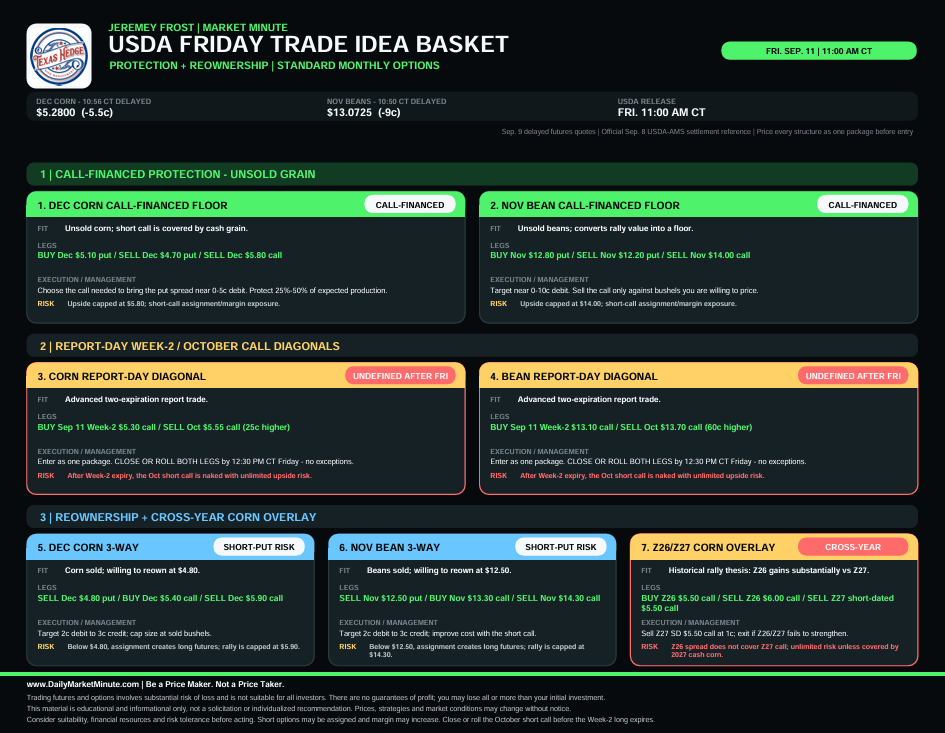
Corn: Corn futures spent the week digesting the September WASDE yield trim to 178.5 bpa.The latest USDA Crop Progress report showed corn conditions marginally improved to 57% good-to-excellent (up 1 point), though still running below year-ago levels. The U.S. corn harvest accelerated to 8% complete, running ahead of the 5-year average as 86% of the crop reached the dent stage. While lower yield expectations and firm ethanol processing demand provided an underlying floor, accelerating harvest momentum brought seasonal pressure. December corn closed the week at $5.27 ½ .
Soybeans: Soybean contracts saw some volatility as traders weighed tight domestic ending stocks against South American planting progress and record-high national diesel costs ($6.00/gal) squeezing harvest logistics. USDA rated national soybean conditions unchanged at 58% good-to-excellent (5 points below last year’s 63% rating). Harvest advanced to 6% complete. While domestic crush margins remain historically strong, early harvest pressure kept November soybeans lower on the week at $13.03.
Wheat: Wheat futures traded lower as global export competition offset domestic supply tightness. Tightening U.S. ending stocks (717 million bushels) continue to provide long-term underlying support, but cheap Black Sea export offers and routine technical profit-taking kept wheat lower on the week. December Chicago wheat closed at $7.13 ½ and KC wheat closed at $7.83 ¾ .
Cotton: Cotton futures drifted lower as early harvest reports in Texas confirmed variable dryland yields, while macro economic headwinds and sluggish export sales commitments weighed in. December cotton closed the week at 81.25 cents/lb.
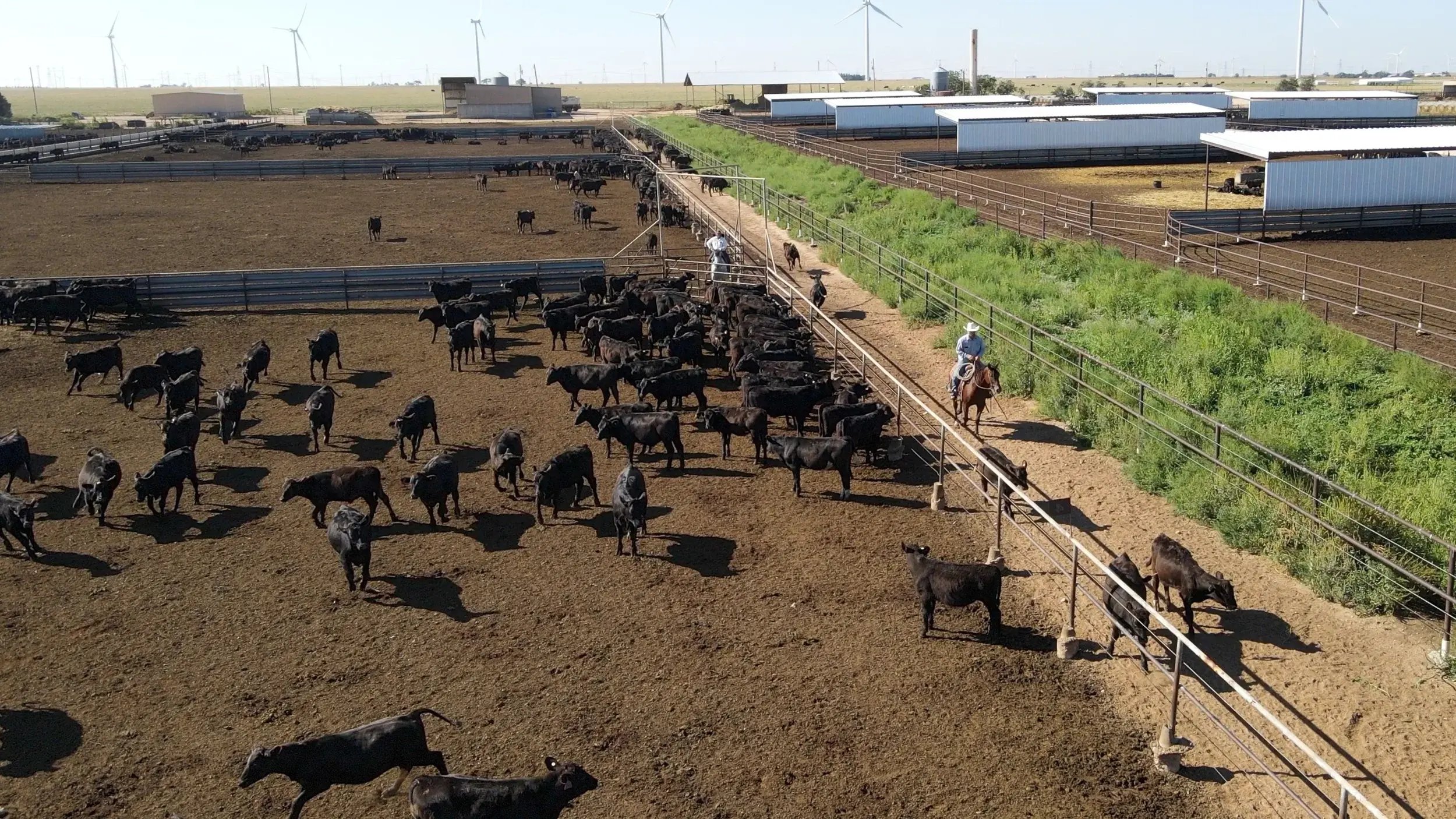
The cattle pit faced three consecutive sessions of heavy selling late in the week, driven by technical breakdowns, slipping packer margins, and position adjustments ahead of Friday's USDA Cattle on Feed report. The rumor mill was also running rampant with rumors that Trump would put an export ban on beef and feeder cattle, to be announced Friday afternoon. As of this publication it is all but rumors and would make very little sense as the US is a net importer of beef.
Live Cattle: Futures broke below key technical support as managed funds liquidated long positions. Estimated beef packer margins collapsed, signaling that processors will likely trim slaughter speeds to defend profit margins. Despite the futures crash, physical cash cattle held firm. December live cattle settled Friday at $216.575.
Feeder Cattle: Feeder cattle contracts took the brunt of the late-week sell-off, dropping hard on Thursday alone. Feeder sentiment was hit by the announcement that the USDA is opening the Santa Teresa, NM livestock border crossing next Thursday, introducing additional feeder calf import flows from Mexico. October feeders closed the week down at $323.50.
USDA Cattle on Feed Report: The USDA’s Friday afternoon report delivered a bullish surprise for the cattle complex, led by August placements falling 9% year-over-year to 1.62 million head, marking the lowest August placement figure since the data series began in 1996 and coming in below trade expectations. Total cattle on feed as of September 1 stood at 11.16 million head (up 1% from 2025), while August marketings slipped 3% to 1.52 million head, also setting a record low for the month. The historic slump in placements confirms that structural calf tightness continues to restrict feedlot availability, setting up a potential supply gap for late winter and spring 2027 fed cattle.
Macro markets were dominated by central bank rate hikes, volatile Treasury bond markets, and energy price swings.
Crude Oil: WTI crude futures saw sharp, two-sided trading, surging toward $100 before easing. While geopolitical headlines in the Middle East and rising energy costs continue to fuel inflation concerns, crude gave back late-week gains following news of pipeline infrastructure progress. Crude closed the week back up around $100/barrel.
S&P 500: Equities traded under pressure as the Federal Reserve delivered a 25-basis-point interest rate hike to combat lingering inflation, signaling that borrowing costs could stay elevated longer. Wall Street also weighed ongoing efforts by Treasury Secretary Scott Bessent to calm the bond market. Despite Bessent’s expanded Treasury buyback operations, 10-year yields pushed near 5%, raising broader borrowing costs. It closed near 7700.